
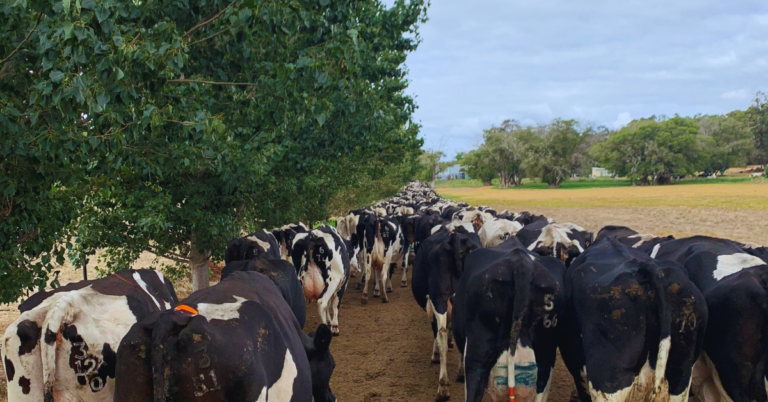
Most dairy cows begin to begin to show signs of heat stress at around 25°C, much lower than many people expect.
Breed, age, milk production level, diet and prior historical exposure to heat all influence how susceptible a herd is.
In late 2023, Dr Josie Garner from Dairy Australia spoke at a webinar about why dairy cows experience heat stress, what it looks like on farm, and the practical steps producers can take to reduce production losses during hot conditions.
Cows produce heat internally as part of normal digestion and rumination. This metabolic heat, combined with heat gained from the environment, must be offloaded to keep their core body temperature within a very narrow and productive range between 38.6 and 39.3°C.
Heat stress occurs when cows are gaining heat faster than they can lose it. When this happens, the impacts can be immediate and severe. Even moderate heat stress can reduce milk production by up to 40%. Heat stress also affects milk protein, fertility, immune function and body condition, with longer-term consequences for herd performance.
Dr Garner says: “In some extremes we can even get a complete cessation of lactation”.
Shade plays a critical role in reducing heat gains, while sweating and panting lowers body temperature, although this is less efficient when humidity is high.
Monitoring heat stress
Heat stress can be monitored simply and effectively on farm by counting respiration rates. A normal respiration rate for cattle is around 40 – 60 breaths per minute. Once rates exceed 60 breaths per minute, active cooling is required.
“At 70 breaths and above, cows are starting to physically struggle,” said Dr Garner.
Panting scores also provide a visual indicator of how hard cows are working to control their body temperature.
Management strategies
Management strategies can make a significant difference. Access to water is critical, with cows requiring at least 20 litres per hour during hot conditions.
“If you only had one upgrade, putting a water trough near the dairy exit laneway is really effective because cows will be thirsty after being milked,” Dr Garner said.
Shade from trees or structures is another priority, as is ensuring adequate airflow in yards and sheds. Simple planning, such as rating paddocks from coolest to hottest, helps ensure cows are returned to the most suitable areas during heat events.
Timing also matters. Feeding and milking earlier in the morning reduces heat load during the hottest part of the day. Providing high-quality feed at night allows cows to compensate for reduced intake during daylight hours. And more digestible forages generate less heat during digestion.
Longer-term strategies such as tree planting, breeding for heat tolerance, improved shade infrastructure and smart cooling technologies such as integrated sprinkler systems can help future-proof dairy systems as hot conditions become more frequent.
You can view the full webinar presentation here.
For more, read how a local Busselton producer added shade to her property and other practical solutions from over east here .