
A South West Black Cockatoo Recovery Working Group will be formed and a coordinator engaged to manage actions under a new collaborative, multi-sector, landscape scale project being led by South West Natural Resource Management (NRM) thanks to a WA State Government Community Stewardship Grant.
South West NRM CEO Dr Manda Page said the two-year project represented a coming together of environmental groups, community, researchers and all levels of government on a rescue plan to galvanise action and coordinate efforts towards saving three species of iconic WA black-cockatoos – the Carnaby’s, Baudin’s and forest red-tailed.
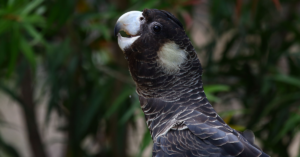
Carnaby’s black-cockatoo – Image: Rob McLean
The South West recovery group will provide a formal mechanism for shared decision-making, information exchange, priority setting and coordinated implementation across sectors with direct reporting lines to the National Black Cockatoo Recovery Team.
The project will also:
- Collate and integrate scientific and citizen science data to deliver region-wide mapping that will identify and prioritise breeding, foraging, roosting, movement and restoration habitats, including key corridors that can be targeted for future investment; and
- Identify important knowledge gaps, establish shared standards and deliver skills development and citizen science training to improve the effectiveness, consistency and scalability of conservation investment across the region.
“The combined and increasing threats of climate change, habitat loss and land-use change demand urgent, adaptive conservation strategies which integrate science and Cultural Knowledge,” Dr Page said.
“Without coordinated action, there is a real risk of losing these keystone species integral to ecosystem function and cultural identity.”
The project is the outcome of two think tank events organised by South West NRM in 2025 and 2026 which brought together about 30 representatives from a range of organisations and sectors all working to improve outcomes for black-cockatoos.
“There has been a great number of community groups, researchers, government and non-government conservation organisations over a long period of time all working tirelessly to improve the trajectory of black-cockatoos,” Dr Page said.
“All are delivering value but we believe this coordinated approach has the potential to create the biggest impact.”
Community members are invited to stay tuned via South West NRM’s monthly e-newsletter for citizen science opportunities which will be made available as part of the project.
“Creating real environmental change means engaging the community in our work,” Dr Page said.
“Community involvement is actually key to the success of any program we undertake. Birdlife Australia’s Great Cocky Count is a fantastic example of citizen-science contributing to important data that guides decisions around appropriate management actions for our threatened species.
“We will support and extend the great work that Birdlife Australia is doing in this space.”
Learn more about South West NRM’s other work to protect black-cockatoos as part of the Ngoolyark and Gnow project.
This project is supported by funding from the Western Australian Government’s State NRM Program.