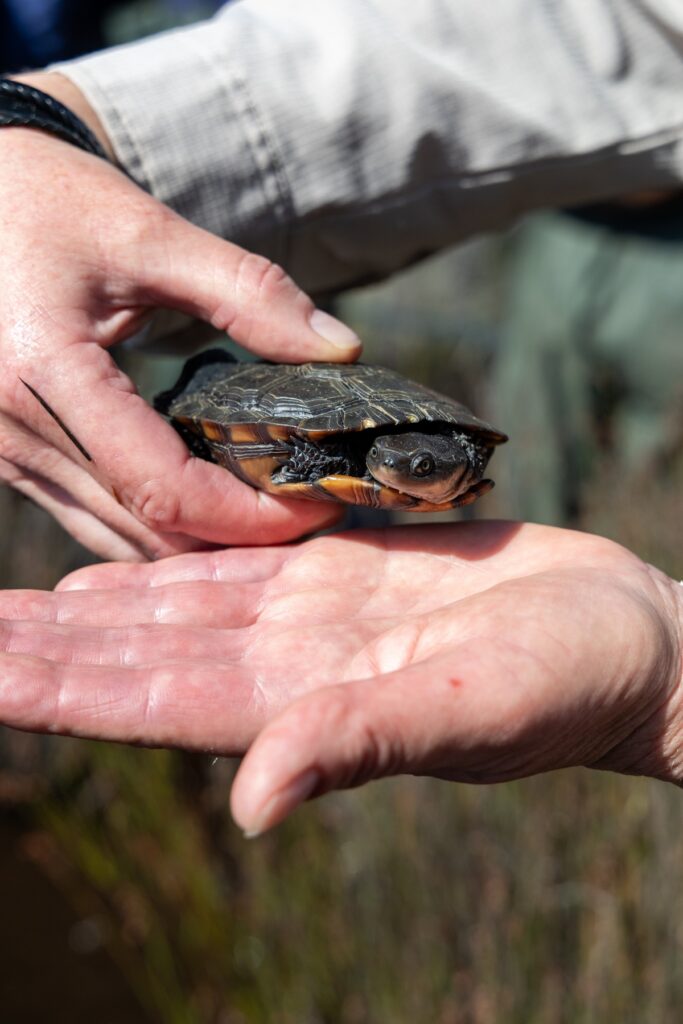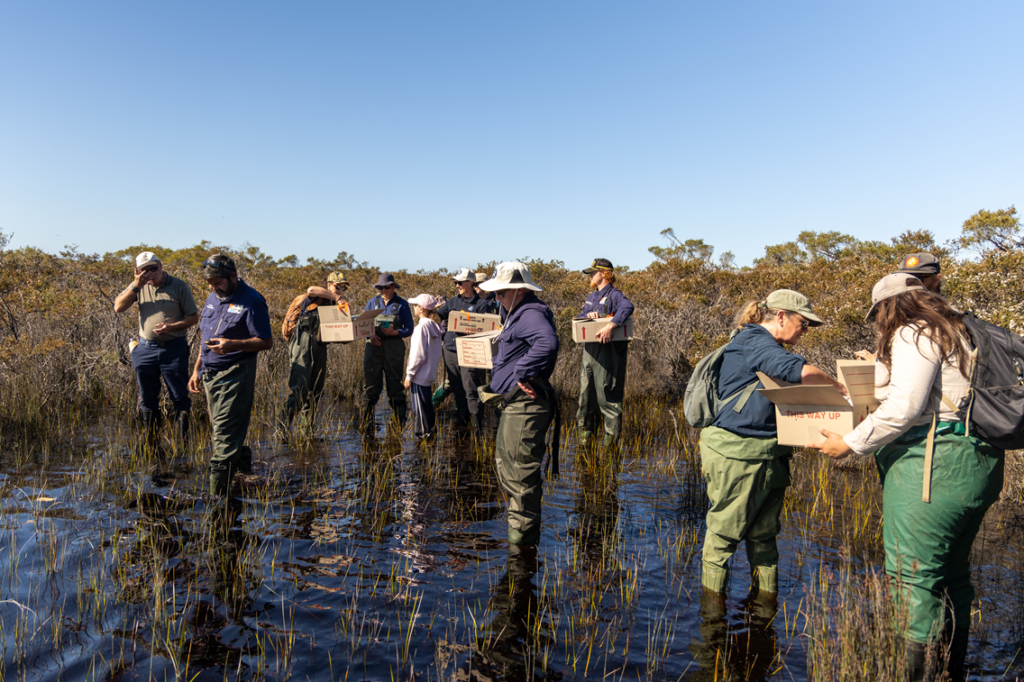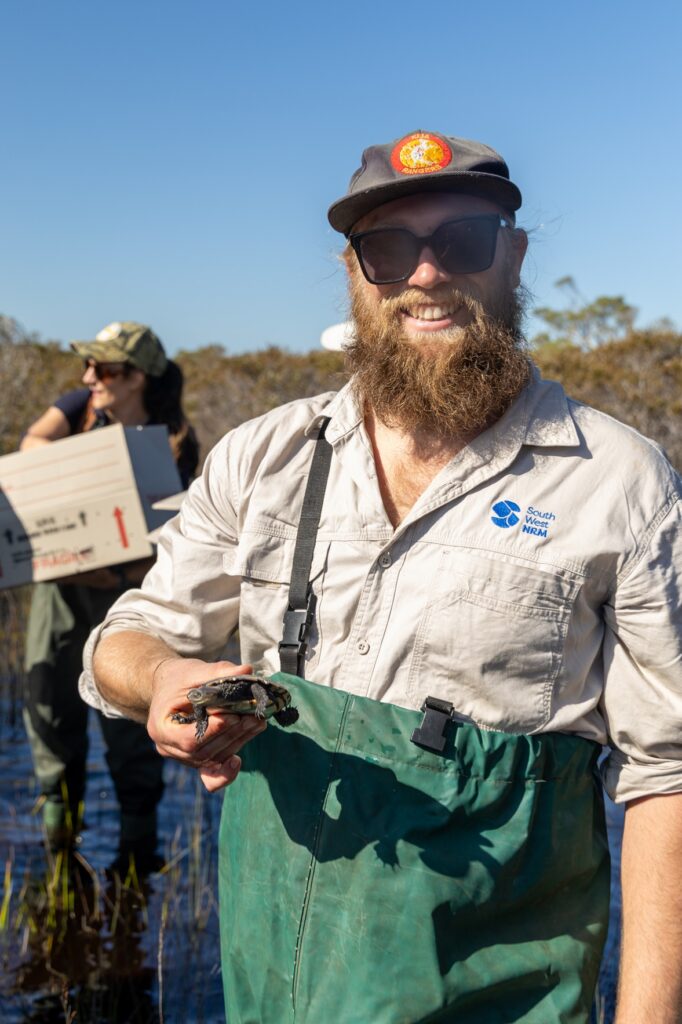
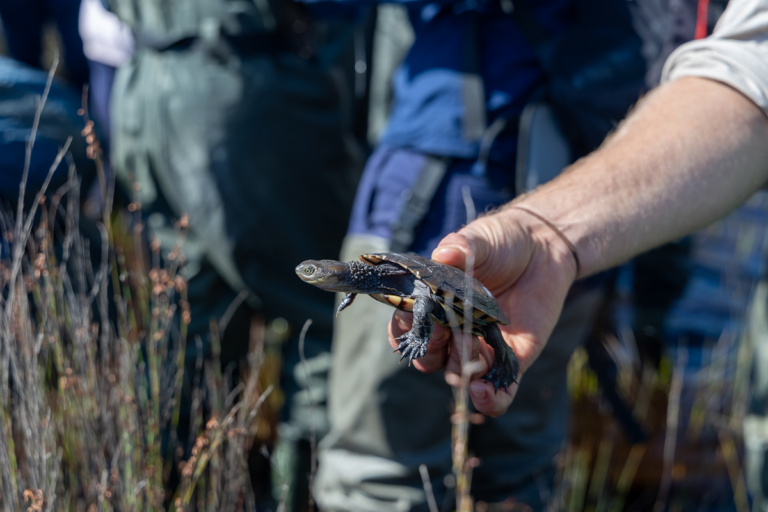
One hundred juvenile western swamp tortoises bred through Perth Zoo’s Native Species Breeding Program were released at a site in the State’s South West earlier this month under a project being delivered via a partnership between South West NRM and the Department of Biodiversity, Conservation and Attractions (DBCA).
The project is part of an ongoing recovery program for the critically endangered tortoise which dates back to the early 90s, involving a range of stakeholders, and designed to save the petite reptile from the brink of extinction.
Twenty-five of the newly released tortoises have been fitted with radio tracking devices which will enable continued monitoring of the population health over the next year.
Back from the brink of extinction
Once thought to be extinct, numbers of western swamp tortoises in the wild clung to less than 50 for many years but thanks to tireless conservation efforts by DBCA, Perth Zoo, researchers, environmental organisations and community groups like Friends of the Western Swamp Tortoise, estimates today number around 300 across four locations.
However the tortoise remains one of the most critically endangered reptiles in the world.
Moving the species south
Originally found just north of Perth, work began to establish a more southerly population of western swamp tortoises to cooler habitat in 2016 by translocating individuals bred at Perth Zoo outside of their known range, recognising that one of the major threats to their survival was a warming and drying climate.
With funding from the Australian Government’s Natural Heritage Trust, South West NRM has been able to assist with this latest leg of the recovery program which has involved monitoring the health of previously translocated tortoises which, once identified as healthy, paved the way for these new additions.
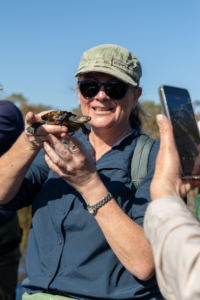
South West NRM CEO Dr Manda Page said it was a privilege for the organisation to be involved in and contribute to this latest stage of a long-term recovery program for such a truly unique species found nowhere else on earth.
“Once we reach the stage of undertaking interventions like translocations, we know that a species is really in peril,” Dr Page said.
“When it comes to preserving the rich and internationally-recognised biodiversity of this region, every species counts and we must sometimes take bold but cautious action if further extinctions are to be prevented.”
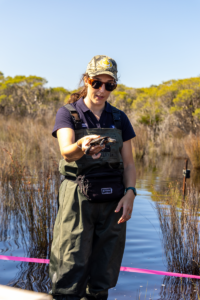
DBCA Research Scientist Bethany Nordstrom said the release marked another important milestone in the long-term recovery of the western swamp tortoise.
“This release is an important step in helping the species reach cooler southern habitat, which may provide an important safeguard as the climate continues to warm and dry across its traditional range,” Ms Nordstrom said.
“The release of these additional 100 juvenile tortoises reflects more than 15 years of collaboration between Perth Zoo, South West NRM, researchers and community conservation groups working together to secure the future of this remarkable species.
“Thanks to the ongoing support of the Australian Government’s Natural Heritage Trust, we can continue vital monitoring, research and on-ground recovery actions that are helping give the western swamp tortoise the best possible chance of survival.”
For more information, visit our dedicated Project Page.
This project is funded by the Australian Government’s Natural Heritage Trust and delivered by South West NRM, a member of the Commonwealth Regional Delivery Partners panel.