
Walking together on Country creates opportunities to share knowledge, strengthen relationships and build a deeper understanding of the landscape.
As part of its Sustainable Agriculture program, South West NRM has recently facilitated a series of on-Country visits, bringing together Traditional Owners, Aboriginal organisations, landholders and project partners at project sites across the South West.
While each visit has been unique, they share a common purpose: building respectful relationships, creating opportunities for Aboriginal participation, supporting two-way learning, and recognising the cultural values and Traditional Ecological Knowledge that can help guide natural resource management.
One of these visits took place at Sunnyside, where a Traditional Custodian, the landholder and project partners walked the property together, discussing the landscape from both cultural and agricultural perspectives. Conversations explored the history of the property, culturally significant places and plants, waterways and landscape restoration.
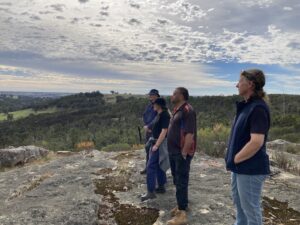
The Sunnyside on-Country visit brought together James Boyle, Committee Member, Blackwood Environment Society; Karrie Williamson, Community Landcare Officer; Murray Collard, Director, Keipa Boodja and landholder Paula Waters.
Landholder, Paula Waters, shared her understanding of the property’s history and ongoing restoration, while Traditional Custodian Murray Collard contributed cultural knowledge and perspectives developed through generations of connection to Country. Together, these conversations built a richer understanding of the landscape and identified opportunities for future collaboration.
At a property near Capel, Traditional Custodian Murry Collard, landholder Deb McKenzie and project partners from GeoCatch explored the site’s cultural and environmental values and discussed opportunities for future cultural heritage surveys.
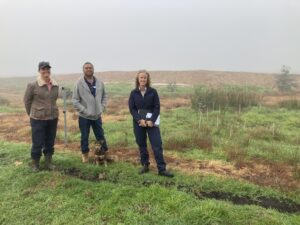
Sharing knowledge on Country: Landholder Deb McKenzie; Keipa Boodja Director, Murray Collard; and GeoCatch Sustainable Agriculture Coordinator, Jenelle Schult during an on-Country visit to a Capel project site.
At the Thomson Brook project site, Traditional Custodian Murry Collard joined the Danju – Jobs Together team and project partners Leschenault Catchment Council, to inspect revegetation works, discuss water quality, biodiversity monitoring and weed management, and consider how Traditional Ecological Knowledge could contribute to the site’s long-term management.
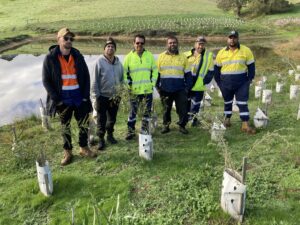
At the Thomson Brook project site, Keipa Boodja Director, Murray Collard (second from left) joined the Danju – Jobs Together team of Laurie Winmar, Shannan Turvey, Peter Jetta, Scott Bazeley and Boston Turvey beside revegetation established in June 2025.
These on-Country visits are one example of South West NRM’s broader commitment to strengthening relationships with Noongar and other Aboriginal and Torres Strait Islander peoples and organisations across the South West.
South West NRM’s Reflect Reconciliation Action Plan provides the framework for this ongoing commitment to reconciliation. It recognises the continuing custodianship of Aboriginal and Torres Strait Islander peoples and commits the organisation to continually strengthening reconciliation through its business practices, workplace culture and partnerships. Through this journey, South West NRM commits to being a culturally competent and culturally safe organisation, building strong partnerships that help ensure First Nation knowledge and experience guide natural resource management planning and decision-making.
Complementing the Reflect Reconciliation Action Plan, our Indigenous Participation Plan provides the framework for embedding these commitments across South West NRM’s work. It guides how South West NRM builds respectful partnerships and supports Aboriginal participation in the planning and delivery of environmental conservation and sustainable agriculture projects.
This work includes partnerships with Traditional Custodians, Aboriginal Corporations, Aboriginal enterprises and Knowledge holders across the South West, including Aboriginal Regional Corporations such as Karri Karrak Aboriginal Corporation, Gnaala Karla Boodja Aboriginal Corporation, Ballardong Aboriginal Corporation and Wagyl Kaip Southern Noongar Aboriginal Corporation.
These principles are reflected in the Australian Government’s Commonwealth Regional Delivery Partners program, which recognises building cultural understanding and identifying and protecting culturally significant sites, resources and values as important components of project delivery.
Meaningful partnerships take time to develop. By creating opportunities for Traditional Custodians, Aboriginal organisations, landholders and project partners to spend time together on Country, South West NRM is helping ensure cultural knowledge and values continue to inform natural resource management across the South West.
Learn more about South West NRM’s commitment to reconciliation by reading our Reflect Reconciliation Action Plan.
The FEAST 2030 project is supported by the Australian Government through funding from the Natural Heritage Trust under the Climate-Smart Agriculture Program and delivered by South West NRM, a member of the Commonwealth Regional Delivery Partners panel.