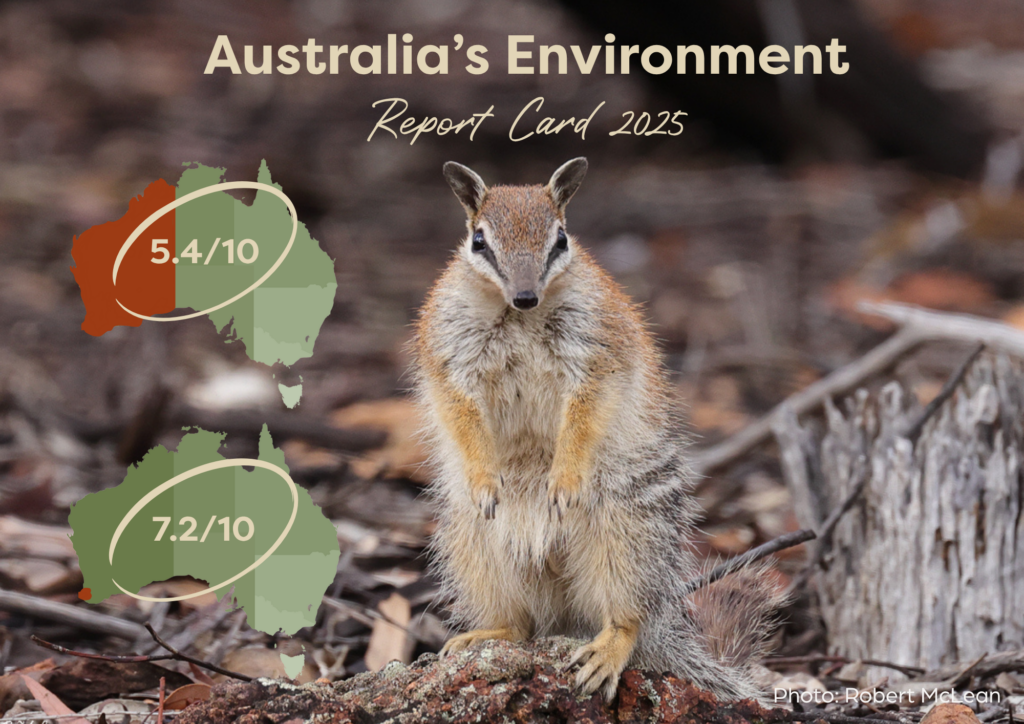
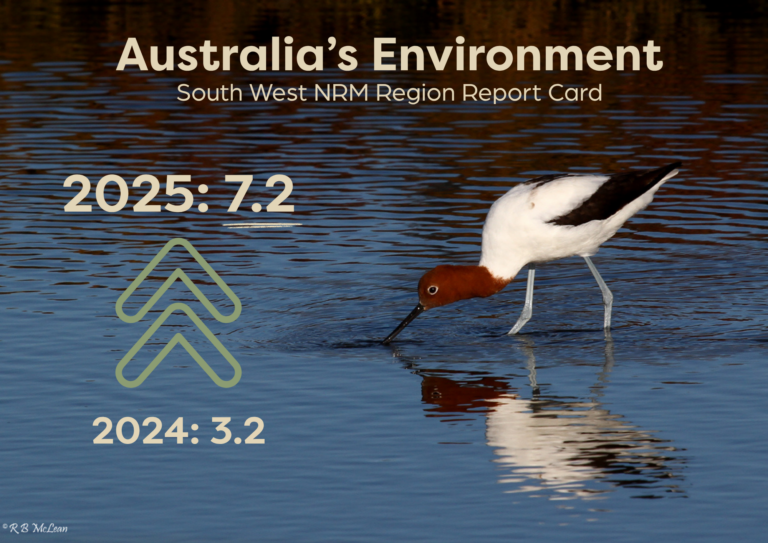
The South West NRM Region’s 2025 environmental score jumped from 3.2 to 7.2. That’s cause for optimism — but also a reason to look deeper at what’s really going on beneath the surface.
What the score actually measures
Each year, the Terrestrial Ecosystem Research Network (TERN) and the Australian National University (ANU) produce Australia’s Environment — a national report card that tracks how our natural systems are faring. For a region as ecologically rich as the South West, it’s an important tool to help track changes over time.
Rather than capturing a single measure, the report card pulls together a wide range of indicators — rainfall, river flows, soil moisture, vegetation growth, tree cover, hot days, exposed soil and fire extent — and combines them into a single environmental score out of 10. That score tells us how the region’s ecosystems are actually responding over time.
The South West NRM Region’s 2025 score: 7.2. A significant rise from 3.2 in 2024. On paper, that looks like a win.
To understand what that number really means, we need to have a look at previous years.
From a tough year to a strong recovery
2024 was a hard year across the South West. Extreme heatwaves hit in February, rainfall was exceptionally low through to April, and the combination drove widespread vegetation stress — browning and tree dieback across the landscape, including karri and jarrah forests.
A score of 3.2 reflected that reality.
The arrival of 2025 saw conditions improve significantly. The region bounced back quickly – rainfall and river flows returned to above-average levels, while vegetation growth hit its highest point since 2000.
This is what scientists mean when they talk about resilience. A biodiverse ecosystem like the South West has a greater capacity to absorb and recover from climate shocks. But that resilience isn’t unlimited — and for a region recognised globally for its biodiversity, the pressure to protect it is all the more urgent.
Why one good year doesn’t tell the whole story
Here’s where it gets more interesting — and more important.
While above ground, vegetation growth surged across the South West in 2025, but below the ground, soil moisture remained below average.
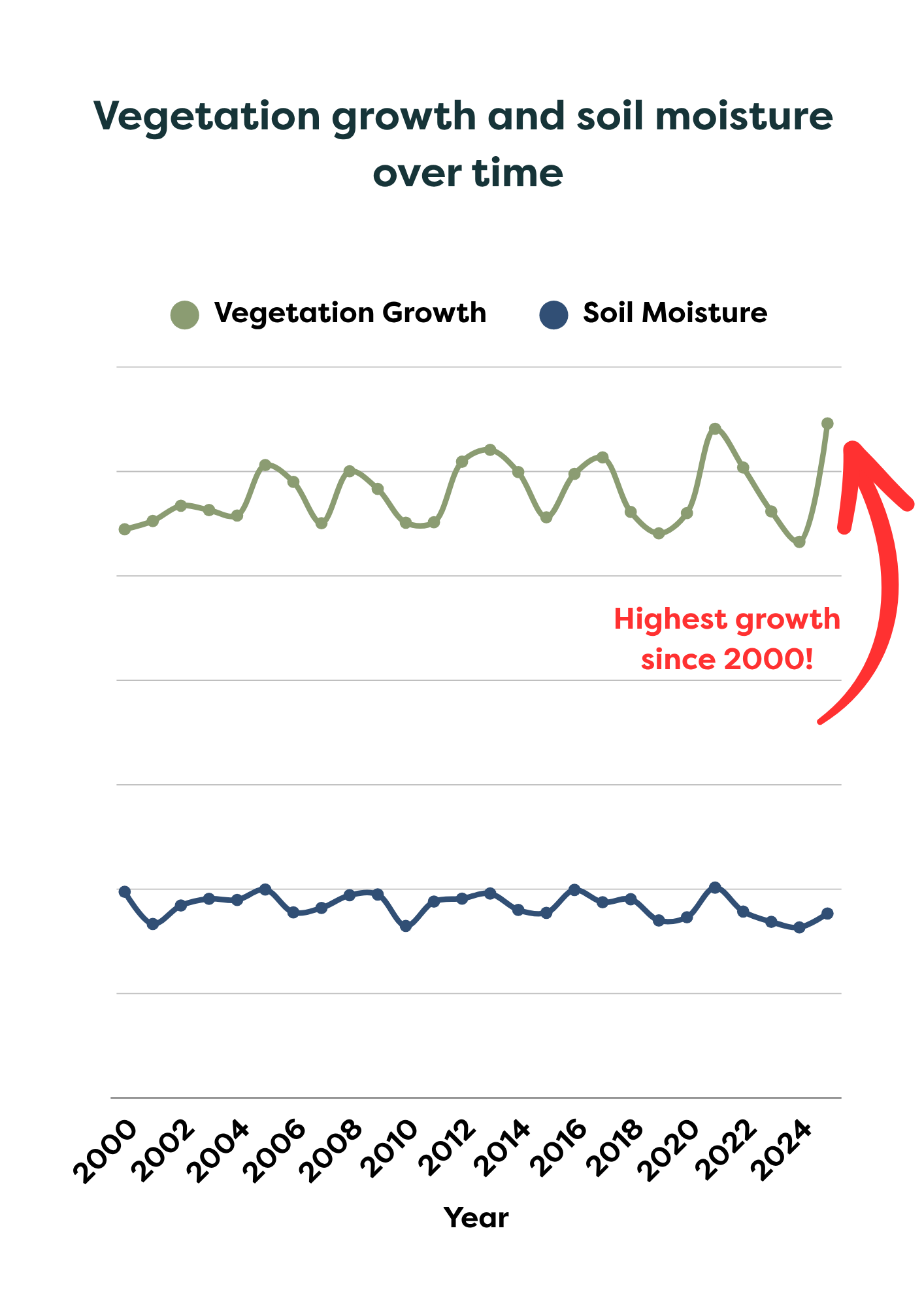
Vegetation can respond quickly to improved seasonal conditions — plants are good at making the most of a wet year. But the deeper systems that support long-term ecosystem health, like soil water reserves, take much longer to rebuild. This is sometimes described as a green drought: the landscape may appear healthy, while below the surface, soils remain dry and farmers continue to face challenges.
This is why the report card tracks more than one number. It helps us see not just what improved, but how stable those improvements really are — and where the system is still under pressure.
What this means for our white-bellied frogs
Abstract environmental indicators become concrete when you think about the species that depend on them.
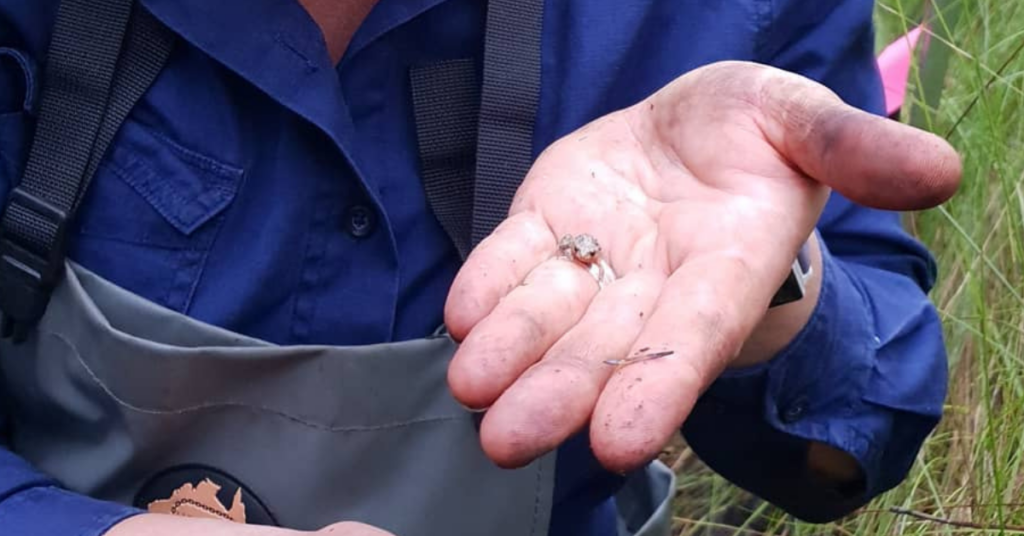
The white-bellied frog (Anstisia alba) is found only in a small part of the lower South West. It’s critically endangered, grows to just 25mm — no bigger than an adult thumbnail — and its entire known habitat covers less than 2km². Between 2007 and 2018, 62 of its 102 known naturally occurring sub-populations became extinct. In most cases, the cause was the same: sites dried out too early as rainfall declined.
For the white-bellied frog, wet soils are not a preference, but a requirement. Breeding happens in moist soil deposits, and if sites dry out before juveniles are ready, the window for survival closes entirely. For this species, soil moisture is not just a data point – it’s directly linked to breeding success and survival.
South West NRM is currently working with the Department of Biodiversity, Conservation and Attractions (DBCA) through its Saving Native Species project to trial habitat rehydration at a potential breeding site. The project uses soil moisture monitoring and irrigation infrastructure to maintain optimal breeding conditions — and test whether this approach can support the species’ recovery into the future.
This is exactly the kind of work that long-term environmental monitoring makes possible: seeing the risks early, before they become permanent.
Keeping score keeps us honest
The South West’s 2025 result is promising, but it should be read as a signal to keep going, not a reason to ease off.
Environmental report cards like this one help us:
- Spot hidden pressures beneath strong headline results;
- Understand how different parts of an ecosystem respond to the same conditions;
- Make better decisions before problems become permanent.
Healthy landscapes, functioning wetlands and resilient ecosystems don’t happen by accident. They rely on long-term monitoring, practical restoration, strong partnerships, and the motivation to keep paying attention even when things look good.
Be part of the story
South West NRM works with partners across environmental conservation and sustainable agriculture to protect and restore the landscapes, waterways and species that make this region extraordinary.
If you want to stay connected to what’s happening across the region — including projects supporting threatened species like the white-bellied frog — subscribe to the South West NRM newsletter.
Understanding change is one thing. Being part of the response is what makes the difference.