
Most people don’t realise that some of the South West’s most important natural areas are not found in national parks or reserves, but on private properties protected through conservation covenants.
Now, South West NRM is helping ensure these special pockets of bushland continue to thrive through a new project with the National Trust of Western Australia.
By reviewing historical records, visiting properties and updating management plans, the team is building a current picture of 23 covenant-protected bushland sites across the region, ranging from small remnants of native vegetation to properties spanning more than 200 hectares.
Conservation covenants provide long-term protection for areas of significant natural heritage on private land. Each represents a landholder’s commitment to protecting a piece of our natural heritage, and together these areas make an important contribution to conservation across the South West.
But protecting an area through a covenant is only part of the picture. Ongoing stewardship provides updated information about these areas and practical guidance to support their management into the future.
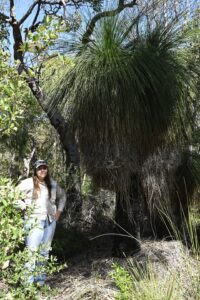
A mature grass tree (Xanthorrhoea sp.) towers over South West NRM Technical Officer Jade Riley in Wilyabrup, where a conservation covenant helps protect an established area of native bushland for the long term.
Taking a fresh look
Before each visit, South West NRM Project Manager Jane Putland and Technical Environment Officer Jade Riley review existing information about the property, including previous Stewardship Reports and Bushland Management Plans and records of threatened flora and fauna in the area.
Once on the property, the work becomes much more hands-on.
The team spends time in the covenanted area, recording flora and fauna and looking at vegetation condition, natural regeneration and habitat features such as tree hollows and rocky areas. They also consider potential management issues including weeds, feral animals, grazing pressure, disease, fire and fencing.
Where possible, the landholder joins the visit, providing valuable knowledge about the property and the wildlife they have observed.
The visits are deliberately scheduled during the peak flowering period, when many plant species are easier to identify.
“When plants are flowering, it makes it much easier to identify exactly what we’re looking at,” Jane explained.
“There can be so many different species out there, and flowering helps us build a better picture of what is present on each property.”
From observations to action
Following each visit, the team prepares a Stewardship Report recording what they have observed and identified.
This information then feeds into a more comprehensive update of the property’s Bushland Management Plan, bringing together information about its vegetation, habitat and conservation values with recommended management actions and priorities.
The plans can provide guidance on practical measures such as weed and feral animal control, maintaining fencing to exclude livestock and improving habitat, as well as information about threatened flora and fauna recorded in the surrounding area.
For Jane, one of the most rewarding aspects of stewardship work is meeting landholders who have made the protection of their natural areas a priority.
“It’s really good to meet people who are passionate about their bush and want to look after it,” she said.
“Being able to provide recommendations and support to help them do that is a really positive part of the work.”
Long-term protection
The National Trust’s Conservation Covenant and Stewardship Program currently includes almost 200 registered covenants protecting around 20,000 hectares across Western Australia.
Behind those figures are individual areas of bushland that landholders have chosen to protect for the long term, preserving a piece of our shared natural heritage for generations to come.
Through the 23 stewardship visits and updated Bushland Management Plans, this project is helping support that commitment, providing current information and practical guidance to help care for these protected areas into the future.
Find out more about South West NRM’s Conservation Covenant Stewardship project.
The project is being delivered by South West NRM for the National Trust of Western Australia as part of its Conservation Covenant and Stewardship Program.