When you work across some of the South West’s most environmentally significant ecosystems, preventing the spread of dieback is an important part of how you work.
South West NRM team members recently completed Green Card training with the Dieback Working Group, refreshing their knowledge of Phytophthora dieback and the practical hygiene measures that help prevent its spread.
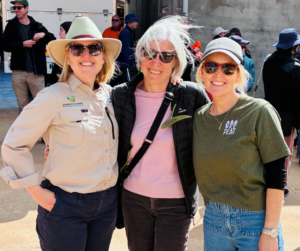
Michelle Priest - Geocatch, Kerryn Hands - Carbanup Landholder and Lorraine Duffy - South West NRM at the Greencard training.
Understanding the threat
Dieback is caused by water moulds called Phytophthora, which live in soil and attack plant roots. More than 60 Phytophthora species have been detected in Western Australia, some of which are believed to be native.
However, Phytophthora cinnamomi, the species with the greatest impact on biodiversity in WA, is not native and is thought to have been introduced with infected horticultural plants in the early 1900s.
In WA’s South West, more than 40 per cent of native plant species are considered susceptible to dieback, including many banksias, hakeas, eucalypts and grass trees.
Putting prevention into practice
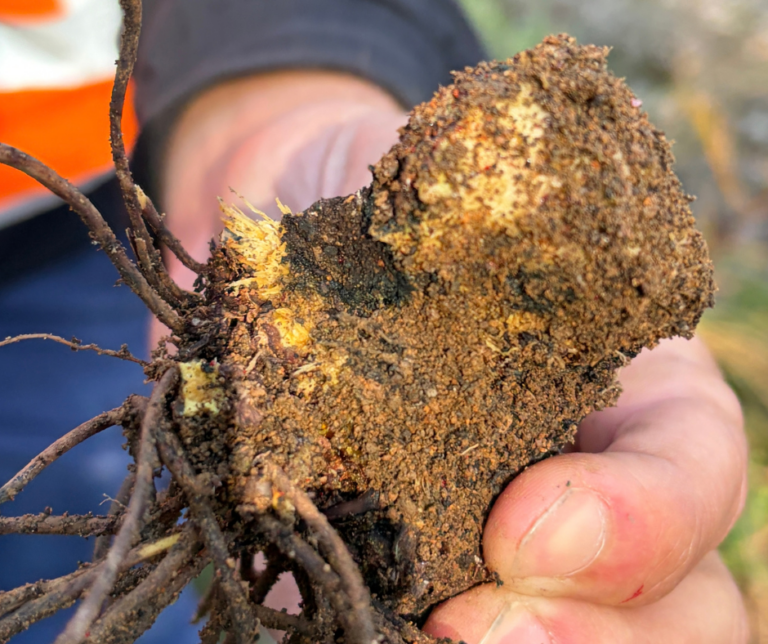
Phytophthora dieback on a jarrah root
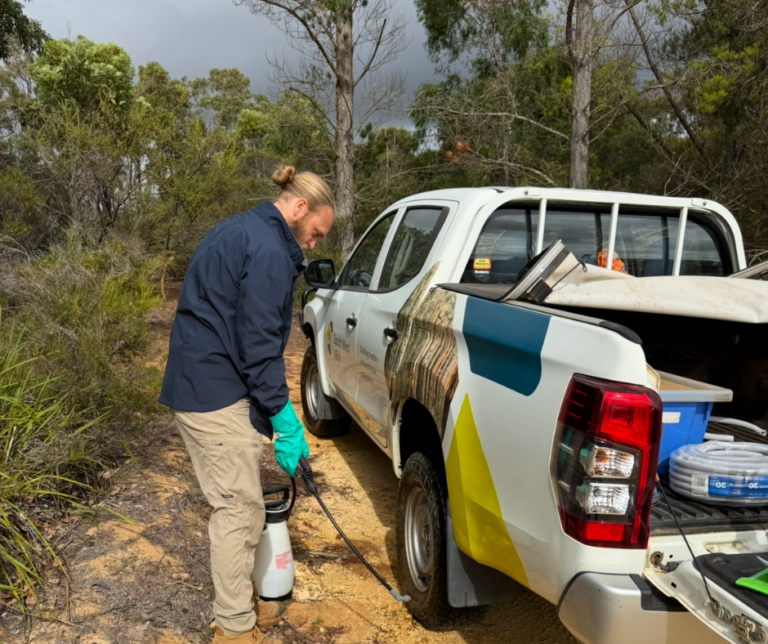
South West NRM Program Manager Environment Tom Andrews cleaning down a vehicle as part of field hygiene procedures
The training covered how to recognise signs of dieback, including lesions in infected jarrah and changes in highly susceptible ‘indicator species’, whose decline can signal the presence and movement of dieback through the landscape.
Dieback can be moved between sites in infected soil and plant material, particularly when conditions are wet. That makes simple measures such as avoiding work in wet conditions where possible, removing soil from boots and equipment, and thoroughly cleaning vehicles before moving between sites an important part of working responsibly in the field.
For South West NRM’s environment team, these practices are an important part of protecting the biodiversity and ecosystems at the heart of our conservation work.