South West NRM is a partner in PEAT Southwest (Protecting Peatland Ecosystems and Addressing Threats in Southwestern Australia), a collaborative research project aimed at building a comprehensive understanding of the region’s peatland ecosystems and translating that knowledge into practical management outcomes.
Running from 2023 to 2027, the project is co-led by The University of Western Australia and Edith Cowan University, and guided by Noongar Elders. It brings together a broad network of research, government and regional delivery partners, including South West NRM, South Coast NRM, the Walpole Nornalup National Park Association, the Department of Biodiversity, Conservation and Attractions (DBCA), Undalup Association, the Western Australian Museum and Biologic Environmental.
The project is funded by Major Supporter Lotterywest and The Ian Potter Foundation.
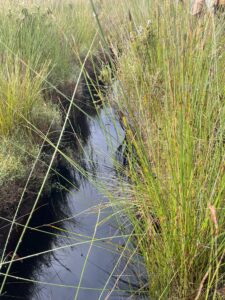
Empodisma peatlands form an ancient and complex, arc-shaped network of peatland ecosystems across the southern corner of Western Australia.
Why this project matters
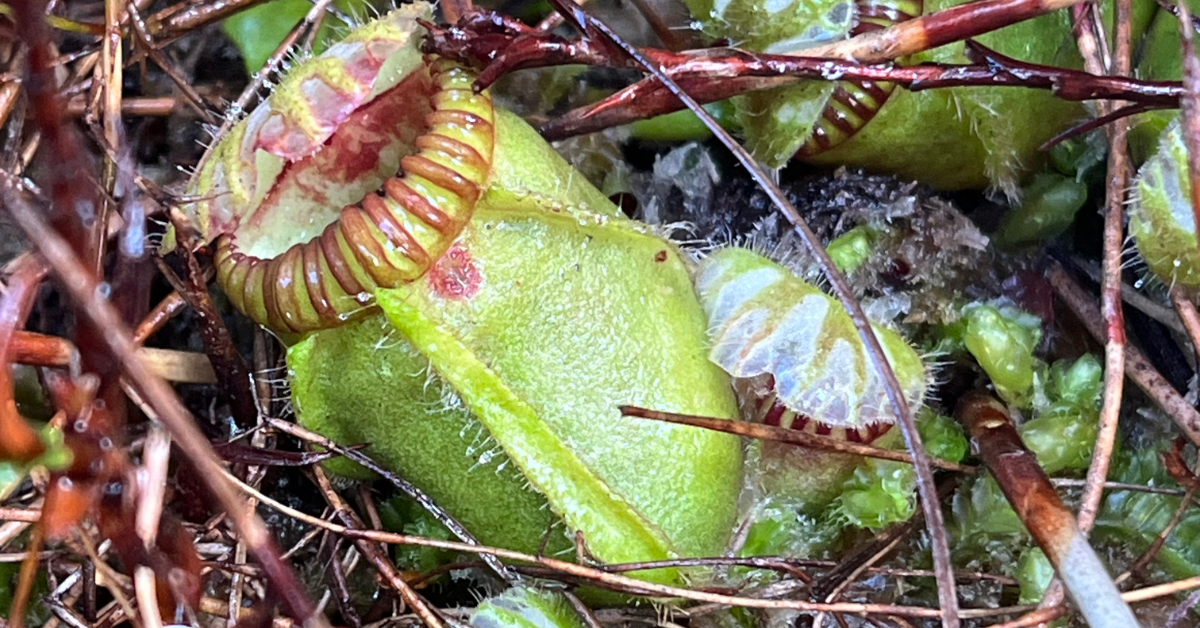
Peatlands are ancient ecosystems formed through the accumulation of organic material over thousands of years. In southwestern Australia, Empodisma peatlands form a network of wetlands that provide important habitat for rare and unique plants and animals, including the sunset frog and Albany pitcher plant.
Although peatlands cover just 3% of the Earth’s land surface, they store around 30% of the world’s soil carbon, double the amount stored by all the world’s forests combined, and account for 10% of global freshwater resources. They also play an important role in water regulation, water quality and biodiversity, while preserving valuable records of past environmental and climate conditions.
Despite their importance, peatlands across the South West and Great Southern remain relatively under-mapped and under-studied.
The Empodisma peatlands were federally listed as a Threatened Ecological Community in 2023.
Declining rainfall, altered fire regimes, invasive species and changes in land use are placing increasing pressure on these fragile ecosystems. As peatlands dry, they can become more vulnerable to fire and degradation, threatening the biodiversity and environmental benefits they support.
Improving our understanding of where peatlands occur, their condition and the threats they face is essential to protecting and managing them into the future.
What we're doing
South West NRM is supporting regional delivery across the South West, working with project partners, Traditional Custodians, landholders, catchment groups and Aboriginal Rangers to identify and assess peatlands and inform future management actions.
Activities include:
Mapping peatland distribution: Combining existing wetland datasets, vegetation mapping, indicator species and local knowledge to identify potential peatland areas, including sites not captured in existing records.
Assessing peatland condition and threats: Undertaking field surveys and using rapid assessment tools to record peatland characteristics, vegetation condition and potential threats.
Working with Traditional Custodians: Supporting engagement and co-design with Noongar Elders and Traditional Owner groups to incorporate cultural knowledge, priorities and participation in peatland conservation.
Engaging landholders and local communities: Working with landholders, catchment groups and other local organisations to improve understanding of peatlands and support practical decisions about their protection and management.
Developing management approaches: Using research and field data to identify priority peatland systems and inform practical approaches to guide priority actions.
Supporting on-ground conservation: Working with project partners and land managers to plan and implement targeted actions to protect and improve peatland health.
Sharing knowledge and resources: Developing field assessment tools and user guides to support peatland identification and assessment, alongside community events and activities to build understanding of these ecosystems.
The project aims to connect scientific knowledge with practical management, helping land managers and communities make informed decisions about protecting these important ecosystems.
Rare carnivorous Albany pitcher plant in the peatlands
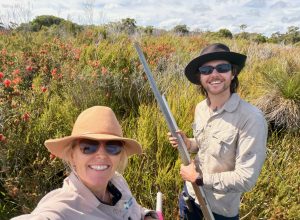
Lorraine Duffy, South West NRM and Josh Hungerford, PEAT Southwest Toolkit Coordinator, UWA
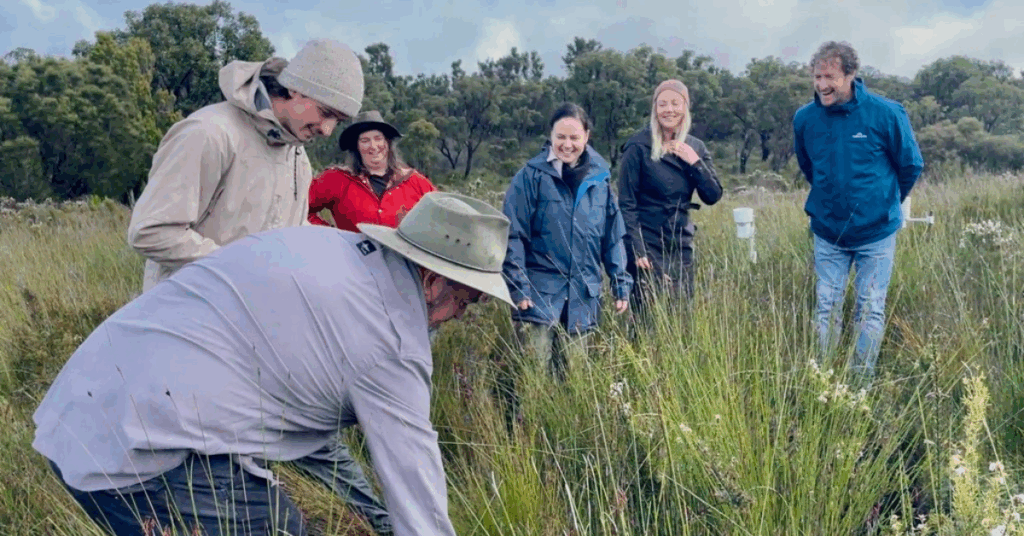
Member of the PEAT Southwest project in the field
Project partners and funding
PEAT Southwest is co-led by The University of Western Australia and Edith Cowan University, guided by Noongar Elders, and delivered in collaboration with Undalup Association, the Department of Biodiversity, Conservation and Attractions (DBCA), the Western Australian Museum, Walpole-Nornalup National Park Association, Biologic Environmental, South West NRM and South Coast NRM.
This project is funded by Major Supporter Lotterywest and The Ian Potter Foundation.