
The Bureau of Meteorology has reported that an average of just 6.8 mm of rain fell across Western Australia in July 2026, making it the driest July since 2012. In the South West, rainfall was typically around 50% of the July average. Further inland, some South West Wheatbelt shires only had about 30% of the July average, while the Great Southern region had their lowest July rainfall on record! The Shire of Kent recorded just 11% of its 1991-2020 July average.
The impacts of the season are being felt differently depending on location and enterprise.
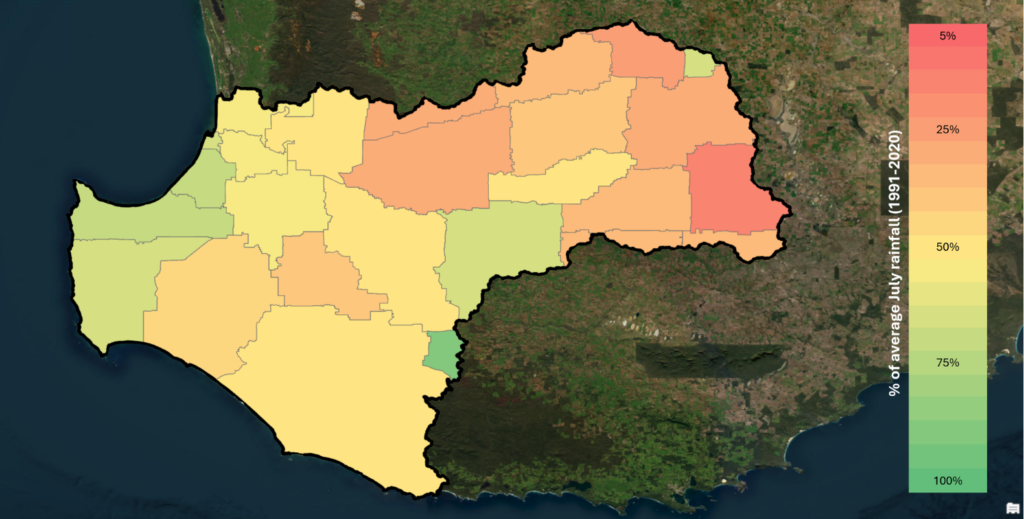
Dry July Map 2026
In the South West, many farmers have welcomed the ability to access paddocks without the usual winter bogging and pugging risk. There is some concern around the lack of significant run-off events with many farm dams currently below expected levels. However, the main concern at this stage is the need for spring rainfall, which is also forecast to be below average.
The threat of a dry spring like 2023, also an El Niño year when our October rainfall was decile 1, is at the back of many farmers’ minds. South West NRM recorded case studies from farmers at that time that provide valuable management tips. These relate to beef production, mixed beef and stone fruit, beef and viticulture, and dairy production.
Most of these case studies focus on acting early, including having the mower ready earlier, applying spring fertiliser earlier or making the first of a split application larger, pivoting from silage to hay, making up for shortfalls in hay production by buying early, speak to feed suppliers and banks early, selling more stock earlier, purchasing tanks if trucking water is looking likely, considering animal health issues, and using Rumen8 software to manage beef and dairy cattle diets.
Further inland, the continued lack of rainfall is raising concerns about grain yield and quality, while many mixed farming businesses are questioning whether they will have sufficient water and feed to retain livestock through summer if conditions do not improve.
Many of the same tips detailed above apply to the cropping region, but with a bigger focus on confinement feeding, desalination, and in the longer term, making dams and catchments fit for a lower rainfall.
The Sustainable Agriculture team at South West NRM is available to support farmers in exploring these options. Whether you’re looking at water security, pasture and fodder management, or other practical strategies to build resilience, we’re here to provide independent advice, connect you with the right information and help identify opportunities that suit your farming business.
For assistance, contact Amelia Thornton at [email protected] or call 0427 806 193.
Further Resources
Article: Drought adaptation: Beef and orchard
Article: Drought adaptation: Beef & vineyards
Article: Drought adaptation: Dairy
News: Expert tips on navigating dry season challenges
News: Helping stretch limited feed further with Rumen8
Article: Tips for confinement feeding
Video: Desalination and water smart farms in WA with Dr Richard George
Article: Making farm dams fit for the 21st century