
Discovery of threatened burrowing crayfish prompts habitat restoration planning

The latest round of environmental DNA (eDNA) surveys undertaken as part of South West NRM’s ‘Curtailing the Crash of Critically Endangered Crustaceans in the South West Region’ project has delivered an important conservation outcome.

Detection of the endangered Dunsborough Burrowing Crayfish at a property near Carbunup River has prompted a next stage of the project, with habitat restoration works now being planned to protect and improve the species’ muddy, riverside habitat.

A search for the critically endangered Margaret River Burrowing Crayfish will continue, with further surveys planned across the region.

Finding and protecting threatened burrowing crayfish

The project focuses on two species of burrowing crayfish from the genus Engaewa: the critically endangered Margaret River Burrowing Crayfish (Engaewa pseudoreducta) and the endangered Dunsborough Burrowing Crayfish (Engaewa reducta).

While surveys are primarily targeting the Margaret River Burrowing Crayfish, they also seek to detect the Dunsborough Burrowing Crayfish, ensuring opportunities to protect either threatened species are not missed.

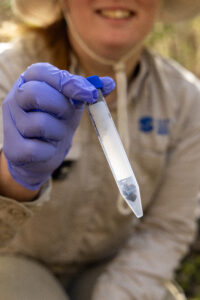
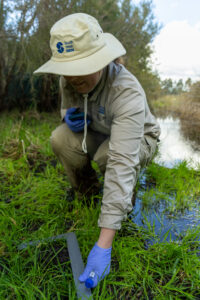
Working in partnership with Nature Conservation Margaret River Region, South West NRM is using an innovative, non-invasive environmental DNA (eDNA) technique developed with Curtin University through one of our earlier Regional Land Partnership projects. Rather than excavating burrows to search for the animals directly, scientists analyse small soil samples collected from the distinctive chimney-like structures built by the crayfish, allowing their presence to be detected without disturbing their habitat.

     Taking samples of soil for eDNA survey at a private property in the region.

Survey results shape the next steps

To date, surveys have been completed across approximately 10 properties, with further sites still to be assessed. While the critically endangered Margaret River Burrowing Crayfish has not been detected during the current round of surveys, highlighting the challenge of locating one of Australia’s rarest freshwater crustaceans, discovery of the endangered Dunsborough Burrowing Crayfish represents an important conservation outcome.

The discovery has enabled the project to move into its next phase, with South West NRM working alongside the landholder to plan habitat restoration works that will improve conditions for the species. Surveys for the Margaret River Burrowing Crayfish will continue throughout the project, with additional properties still to be investigated.

From detection to habitat restoration

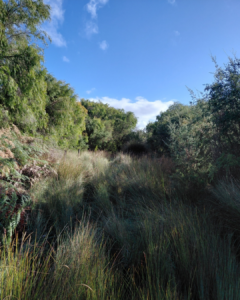
Planning is now underway for habitat restoration at the Carbunup River property where the Dunsborough Burrowing Crayfish was detected.

The discovery has enabled South West NRM to work with the landholder to develop a targeted program of on-ground works aimed at improving the health of the surrounding habitat and reducing threats to the species. The restoration program has been designed to improve the broader ecosystem which supports the crayfish, recognising the importance of healthy drainage lines, native vegetation and good water quality.

The proposed works include stock exclusion fencing, weed control and revegetation of drainage lines and surrounding habitat. Native reeds, sedges and other local species will be established to help filter nutrients and sediment from runoff before it reaches crayfish habitat, while fencing will prevent livestock from accessing sensitive areas. Vegetation surveys will also be undertaken before and after the works to help monitor ecological change over time.

These actions are based on the national recovery plan for threatened burrowing crayfish and are designed to reduce threats, improve habitat quality and support the long-term persistence of the species.

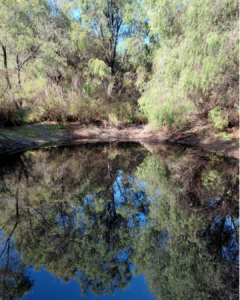
soak carbanup river

A soak and connecting channel on the Carbunup River property, where habitat restoration works are being planned to improve conditions for the endangered Dunsborough Burrowing Crayfish and other native species.

Why burrowing crayfish matter

Although rarely seen, burrowing crayfish play an important role in maintaining healthy riverside ecosystems.

Often described as ecosystem engineers, they create complex underground burrow systems that move water, oxygen and nutrients through the soil. Their burrows also provide habitat for other organisms and help maintain the ecological processes that support healthy groundwater-dependent wetlands.

Protecting and restoring habitat for burrowing crayfish benefits far more than a single species. The same actions that improve conditions for these threatened crayfish—such as restoring native vegetation, protecting drainage lines and reducing nutrient runoff—also enhance habitat for many other native plants and animals that depend on healthy wetlands.
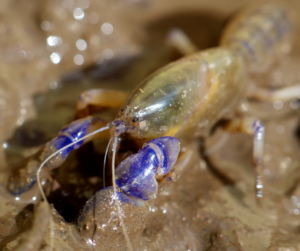
The Margaret River Burrowing Crayfish. Photo credit: Steve Tribbeck

As surveys continue and habitat restoration planning progresses, the project will continue building the knowledge, partnerships and on-ground actions needed to help conserve some of the South West’s most threatened  species.

Learn more about South West NRM’s ‘Curtailing the Crash of Critically Endangered Crustaceans in the South West Region’ project.

This project is funded by the Australian Government’s Natural Heritage Trust and delivered by South West NRM, a member of the Commonwealth Regional Delivery Partners panel.