Protecting Critically Endangered Crustaceans in the South West
Home » Protecting Critically Endangered Crustaceans in the South West
About the project
South West NRM is working to support the recovery of critically endangered crustaceans in the South West region.
Running between 2024 and 2028, the project focuses on two critically endangered species, the hairy marron (Cherax tenuimanus) and Margaret River burrowing crayfish (Engaewa pseudoreducta), with conservation actions also supporting the endangered Dunsborough Burrowing Crayfish (Engaewa reducta) where it is detected.
Work includes surveying for new occurrences, protecting and restoring habitat, and investigation of the process for establishing a secure wild population of hairy marron through the release of animals from Perth Zoo’s headstarting program.
Why this project matters
The Margaret River burrowing crayfish and hairy marron are both critically endangered species with highly restricted distributions in the South West Capes region. Protecting these species also means protecting the freshwater and wetland ecosystems they depend on.
Margaret River burrowing crayfish
The Margaret River burrowing crayfish is one of only 11 invertebrate species listed among the 110 priority species in Australia’s Threatened Species Action Plan 2022–2032.
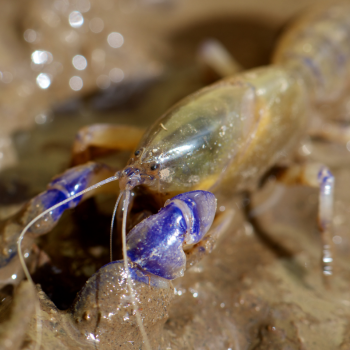
Burrowing crayfish live in burrows rather than rivers, lakes or dams, with large claws adapted for digging. Though no bigger than your finger, they play an important role underground. Their burrows, which can extend up to four metres deep, turn over and aerate the soil, helping air and nutrients reach plant roots.
The Margaret River burrowing crayfish is threatened by habitat loss through land clearing, farm dam construction, groundwater extraction and a drying climate.
Margaret River burrowing crayfish Photo: Steve Tribbeck
Hairy marron
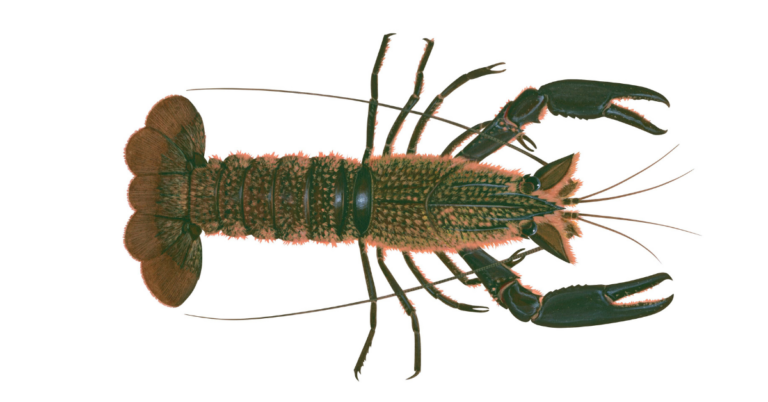
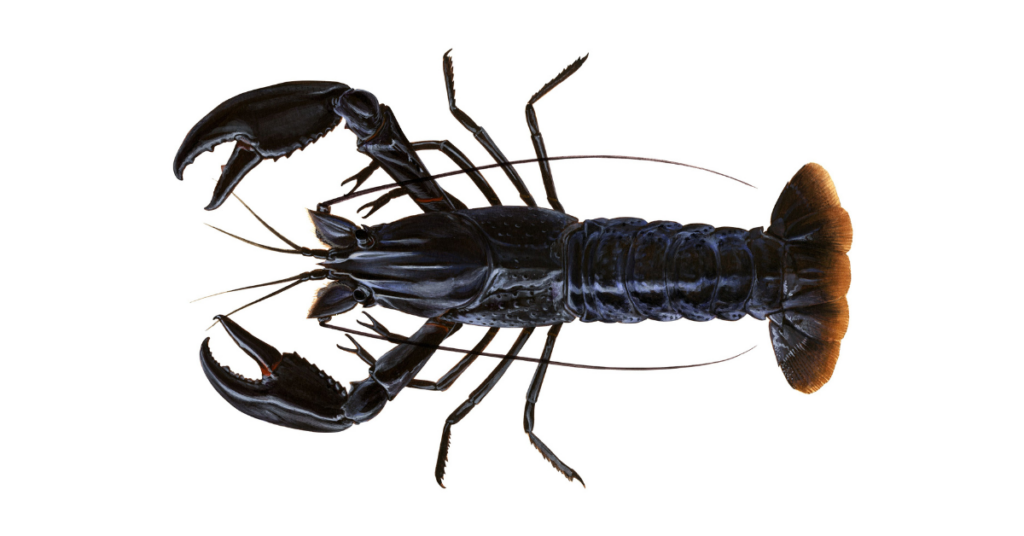
The Hairy marron occurs only in fresh water in and near Margaret River. It is similar in appearance and size to the more common smooth marron, distinguished by short, bristled hairs extending from its head to its thorax. The most significant threat to the species is hybridisation with smooth marron. The two can also be difficult to distinguish, particularly when hairy marron are juveniles, making the species vulnerable to fishing.
Hairy marron illustration R. Swainston/anima.Fish
Smooth marron illustration R. Swainston/anima.Fish
What we're doing
From 2024 to 2028, the project is working to identify and protect populations of Margaret River burrowing crayfish and hairy marron and establish a secure wild population of hairy marron from captive-bred stock.
Margaret River burrowing crayfish
For Margaret River burrowing crayfish, an eDNA assay developed by eDNA Frontiers at Curtin University through a previous South West NRM project is being used to survey priority habitat for previously unknown populations. Where populations are confirmed, the project will work with landholders to protect and improve habitat through conservation agreements, stock-exclusion fencing, weed control and revegetation. Samples are also tested for Dunsborough burrowing crayfish, with conservation actions extending to this species where appropriate.
Hairy marron
For hairy marron, surveys using eDNA, trapping and genetic testing aim to identify previously unknown populations of genetically pure animals. Confirmed sites can then be protected through landholder agreements and fencing, with water quality monitoring helping to understand the conditions in which hairy marron persist.
In partnership with the Department of Biodiversity Conservation and Attractions (DBCA) and Perth Zoo’s Native Species Breeding Program, the project is also preparing for the first wild release of hairy marron . A secure release site will initially be trialled using hybrid smooth-hairy marron, with monitoring used to assess its suitability before genetically pure hairy marron from Perth Zoo are released. The knowledge gained will help inform future hairy marron releases and site selection.
Video: 2011 Hairy Marron Short Film: Narrated by ABC South Australia’s Ann Jones this short film presents 20 years of research gathered by the Murdoch University Centre for Fish and Fisheries on the native freshwater crayfishes of the South West of Western Australia.
Project partners and funding
South West NRM is working closely with the Department of Biodiversity, Conservation and Attractions (DBCA), Perth Zoo, Nature Conservation Margaret River Region and Karri Karrak Aboriginal Corporation, combining knowledge and expertise to support the recovery of these critically endangered species.