
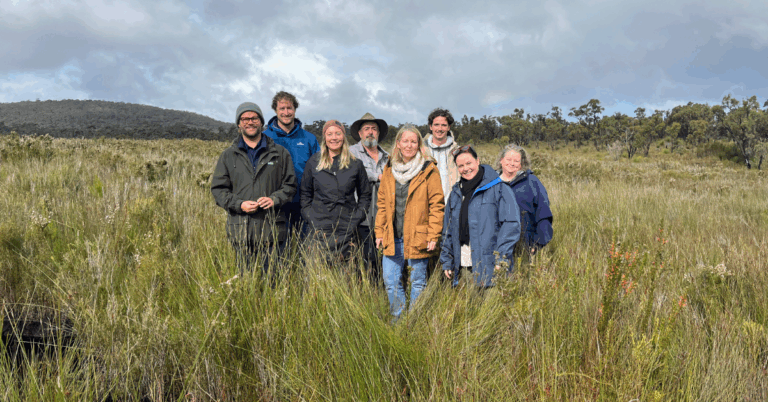
Some members of the Peatlands Project Team out in the field.
Protecting Peatland Ecosystems and Addressing Threats in Southwestern Australia (PEAT) Project
The Empodisma peatlands form an ancient and complex, arc-shaped network of peatland ecosystems across the southern corner of Western Australia.
While largely hidden from view, peatlands located in southwestern Australia are essential habitats for rare and unique flora and fauna, including the Sunset Frog and the Albany Pitcher Plant.
The Empodisma peatlands were Federally listed as a Threatened Ecological Community in 2023 but research to this point has only been limited.
What we do know is that peatlands globally are significant ecosystems and enormously valuable natural resources which makes important contributions to biodiversity, water quality, flood and erosion protection, and to carbon and methane cycles.
We also know they are increasingly likely to lose condition and become flammable as our climate dries.
This initiative is designed to enhance scientific understanding and management of the Empodisma peatlands, and builds on an existing transdisciplinary research project focused in the Walpole Wilderness Area, where peatlands have been extensively damaged by fire.
The problem
- Despite covering just 3% of land on Earth, peatlands store 30% of the world’s soil carbon—double the carbon stored by all global forests combined—and account for 10% of global freshwater resources.
- Peatlands are ancient features, and much like rock formations preserved across thousands of years, their layers of organic materials built and preserved across time provide important insights into past climate, biodiversity and cultural changes.
But peatlands face significant threats:
- They are highly vulnerable to disturbances such as drying, fires, and invasive species. And these threats are often amplified when they occur together.
- Feral animals, agriculture and urban expansion (including groundwater extraction), and climate change pose increasing threats to these fragile ecosystems.
What we’re doing about it
This PEAT Southwest project expands the existing PEAT project known as PEAT – Protecting Peatland Ecosystems and Addressing Threats in Southwestern Australia – by extending the area of work to include peatland systems across the State’s South West and Great Southern regions.
Co-led by The University of Western Australia and Edith Cowan University, and guided by Noongar Elders, this broader project is being delivered in partnership with South West NRM, our more southerly counterparts – South Coast NRM – the Walpole Nornalup National Parks Association, the Department of Biodiversity, Conservation and Attractions, the Western Australian Museum and Biologic Environmental.
Thanks to the depth and breadth of people and organisations involved, this extended project creates an incredible opportunity for the rapid transfer of scientific knowledge to on-ground action at a large scale to enhance peatland health.
We are aiming to put our peatlands on the global map.
To stay in the loop as this project progresses, make sure you are signed up to receive our monthly E-newsletter.
This project is funded by Major Supporter Lotterywest and the Ian Potter Foundation. It is co-led by the University of Western Australia and Edith Cowan University, with collaborative partners Undalup Association, the Department of Biodiversity, Conservation and Attractions, the Western Australian Museum, the Walpole-Nornalup National Park Association, Biologic Environmental, South West NRM and South Coast NRM.
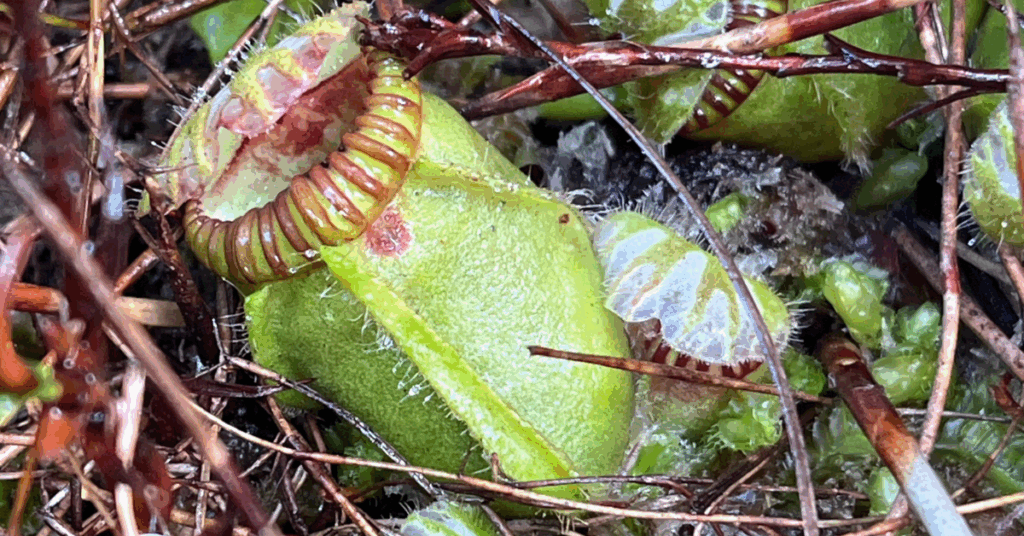
Rare carnivorous Albany pitcher plant in the peatlands.
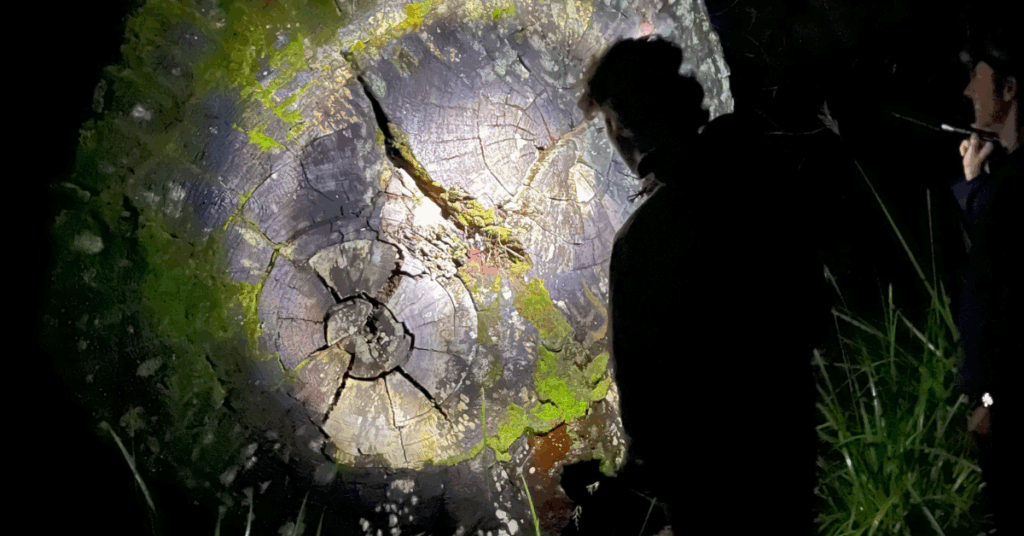
Night stalk in the peatlands.
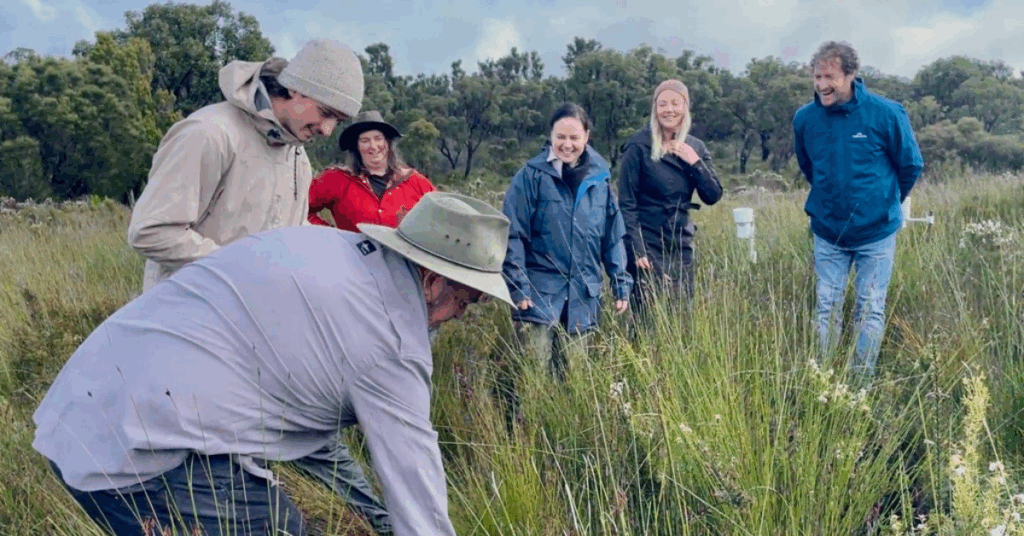
Peatlands project team.
Project Partners
Lotterywest
Ian Potter Foundation
Undalup Association
Walpole Nornalup National Parks Association
Department of Biodiversity, Conservation & Attractions
Western Australian Museum
Biologic Environmental
South Coast NRM